
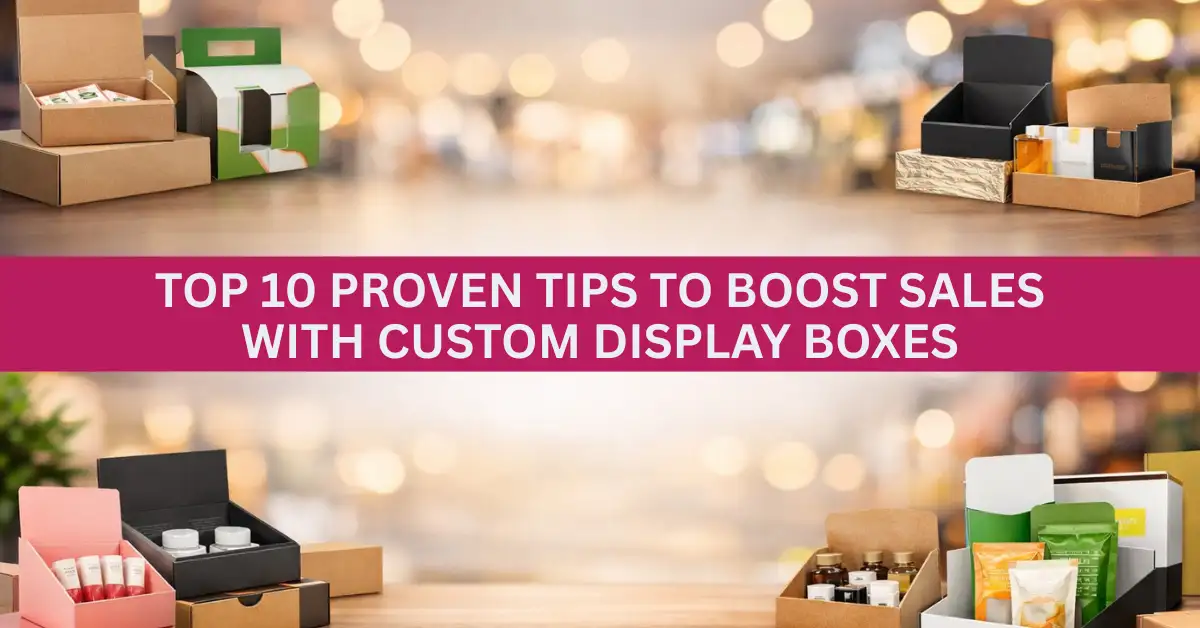
Imagine you’re a business owner struggling to stand out in a competitive marketplace. Your products are great, but they aren’t selling as much as you hoped. You’ve tried various marketing strategies, but something still feels off.
Have you ever stopped to think about the way your products are displayed? When a shopper strolls through a store, their brain processes thousands of visual cues every minute. To win in this environment, your product cannot sit on a shelf but must command attention.
This is where Custom Display Boxes act as your most effective silent salesperson. They bridge the gap between a wandering eye and a finalized purchase. In this article, let’s explore how much of a difference custom packaging can make.
1. Prioritize Structural Integrity
A display box’s first impression relies heavily on its structural integrity. If the box appears fragile or mishandled, customers may associate that weakness with the product inside. To prevent this, focus on durability and strength.
- Durability in High Traffic Areas: Use materials like high-grade corrugated cardboard or rigid paperboard for optimal shape retention, such as high-quality cardboard display boxes, that maintain their structure even after frequent customer handling.
- Material Choice: Select finishes that are resistant to fingerprints and moisture to keep the display looking pristine throughout its life.
- Weight Distribution: Ensure the base is heavy enough to prevent tipping, particularly for top-heavy products. This keeps the box stable and intact in high-traffic environments.
2. Master the Visual Hierarchy
When customers approach a display, their eyes naturally follow a specific scanning pattern. If the design is cluttered or confusing, important messages may go unnoticed. To effectively communicate your product’s value, you must master the visual hierarchy, guiding the customer’s gaze and ensuring key information is highlighted.
Eye-Level USP
Place your most important selling point, such as “100% Organic” or “Instant Pain Relief,” at the top center of the display. This positioning ensures it’s the first thing customers see.
Typography Flow
Use bold, sans-serif fonts for the primary message and smaller, readable fonts for secondary details. This creates a clear distinction between main and supporting information.
Negative Space
Don’t be afraid to leave empty areas on the display. Negative space enhances the visibility of key text and prevents the design from feeling too crowded, improving overall readability. By mastering the visual hierarchy, you can make sure your messaging is clear, impactful, and easy for customers to absorb at a glance.
3. Leverage Color Psychology
Colors have a powerful impact on the subconscious and can trigger immediate emotional responses in customers before they even read a word of your messaging. Understanding color psychology allows you to tap into these emotional triggers and influence purchasing decisions effectively.
Emotional Triggers
Different colors evoke specific emotions. For example, red creates a sense of urgency, blue builds trust and professionalism, and green emphasizes health and nature. Choose colors that align with your brand message.
Environment Contrast
Research the store’s typical color schemes and use colors that contrast with the surroundings. This ensures your display stands out and grabs the customer’s attention without clashing with the store’s aesthetic.
Consistency
Make sure the shades on your custom display boxes match your primary packaging. Consistent color usage reinforces brand recognition, helping customers quickly identify your product in any setting. Leveraging color psychology effectively helps you connect with customers emotionally and enhances the overall visual appeal of your display, making it likely to drive sales.
4. Incorporate Interactive Elements
Engagement plays a crucial role in turning a shopper’s curiosity into a sale. Interactive elements on your custom display boxes provide customers with an opportunity to engage physically with the product, which can increase the likelihood of purchase. The more a customer interacts with a product, the more likely they are to develop a sense of ownership.
Key Points:
- Die-Cut Windows: Allowing customers to see and feel the product through die-cut windows, like candle boxes with window, helps them see the product and quality without opening the box. This tactile interaction can encourage them to make a purchase.
- Tactile Finishes: Consider adding spot UV, embossing, or soft-touch lamination to custom CBD display boxes to make the box feel premium. The extra tactile experience increases perceived value and gives the customer a sensory connection to the product.
- Digital Integration: Including a QR code that links to a product demonstration video, customer reviews, or your brand’s social media pages can further engage the customer. This adds an interactive layer that connects them with your brand beyond the physical product.
5. Optimize for Point-of-Purchase (POP) Locations
Point-of-purchase (POP) locations, such as checkout counters and high-traffic areas, are crucial spaces where sales can be made on impulse. To make the most of these valuable spots, your display box needs to be designed with functionality and visibility in mind.
Key Points:
- Compact Footprint: Design counter-top displays to provide maximum impact while being space-efficient. These displays should be small enough to fit on the counter without overwhelming the area, making them “retailer-friendly.”
- The Impulse Factor: In POP areas, the product’s messaging should address an immediate need or problem, enticing the customer to grab it on impulse. Messaging such as “Quick Fix” or “Limited Time Offer” can encourage last-minute purchases.
- Floor Displays: For larger products, use standalone floor units. These displays should be strategically placed to guide foot traffic toward your section, ensuring that customers notice the product on their way through the store.
By optimizing your display for POP locations, you increase the chances of impulse buys and improve sales conversions in high-traffic areas.
6. Use Seasonal and Limited-Edition Themes
Stale and unchanging displays can blend into the background, failing to attract attention. To keep your product fresh and engaging, it’s important to update your display regularly with seasonal or limited-edition themes. This creates excitement and provides a reason for customers to revisit and purchase.
Key Points:
- Urgency through Design: Incorporate elements that create a sense of urgency, such as holiday-themed colors or banners that read “Limited Time Only.” This encourages quicker purchasing decisions.
- Promotional Sleeves: Instead of redesigning the entire display, you can use custom promotional sleeves to update the look for seasonal events, like Black Friday, Christmas, or Summer sales. This allows for flexibility without the need for a complete overhaul.
- Freshness: Regularly rotating the design and introducing new seasonal themes helps avoid “shelf blindness.” It gives returning customers something new to discover, encouraging them to engage with the product again.
7. Simplify the Unboxing Experience
The unboxing experience doesn’t just end when the customer leaves the store—it continues once the product is in their hands. Making this process effortless and pleasant can enhance customer satisfaction and strengthen brand loyalty.
Seamless Removal
Ensure the product is easy to lift out of the display without damaging the secondary packaging. This eliminates frustration and makes the unboxing process enjoyable for the customer.
Hidden Delights
Include a thoughtful surprise, such as a “Thank You” note or a discount code on the inside flap of the box. Small touches like these build a stronger connection with the customer and make them feel appreciated.
Functional Design
If the display box is intended to be reused, ensure it’s sturdy enough to serve as a storage container after the product is removed. This adds value by extending the product’s usefulness beyond its initial purpose. By focusing on a smooth and enjoyable unboxing experience, you increase customer satisfaction, encourage repeat purchases, and increase the overall perception of your brand.
8. Highlight Benefits, with Features
When designing your display box, it’s essential to focus on how the product improves the customer’s life while listing its features. Customers want to know how the product will solve their problems or enhance their experience. By focusing on benefits, you speak directly to the transformation your product offers.
Key Points:
- The Rule of Three: Limit your key selling points to three bullet points. This makes the information easy to digest and ensures the most important benefits stand out.
- Problem-Solving Copy: Use language that directly addresses the customer’s pain points, such as “Instant Relief from Back Pain” or “Long-Lasting Freshness.” This helps customers connect emotionally with the product.
- Action-Oriented Language: Encourage movement and action with verbs like “Transform,” “Protect,” or “Achieve.” This gives the customer a sense of empowerment and motivates them to make a purchase.
9. Test and Iterate with Prototypes
What works in theory might not always perform well in practice. It’s essential to test your display box designs before committing to a full production run. Prototypes allow you to identify issues early and ensure the design will have the desired impact in a crowded retail environment.
Key Points:
- A/B Testing: Test different design elements, such as color schemes, headlines, or product placements, to see which combinations generate high sales. This gives you insights into what resonates best with your target audience.
- Retailer Feedback: Ask store managers and staff for feedback on which displays are easier to stock, most attractive, and most likely to catch the customer’s attention. Their input can be invaluable in refining your display design.
- Mock-ups: Always request a physical prototype before proceeding with mass production. This allows you to verify color accuracy, test the sturdiness of the box, and ensure it meets your design specifications.
Testing and iterating with prototypes help you refine your display box design, ensuring it performs optimally in real-world retail settings and ultimately boosts your sales.
10. Prioritize Brand Consistency
Consistency is key when it comes to creating a memorable and reliable brand identity. Your display boxes should reflect the core values and aesthetic of your brand, making it instantly recognizable to customers. A unified look across packaging, displays, and other marketing materials strengthens your brand’s presence.
Key Points:
- Logo and Brand Colors: Ensure your brand’s logo, typography, and colors are consistently applied across all display boxes. This reinforces brand recognition and allows customers to immediately identify your product on the shelf.
- Messaging Alignment: Align the tone of your display box copy with your overall brand messaging. Your brand might be fun and youthful or serious and professional, but your display should consistently reflect its personality.
- Packaging Synergy: Your display box should complement your product’s packaging. This creates a cohesive experience, where everything from the shelf display to the product itself feels connected.
By prioritizing brand consistency in your custom display boxes, you help customers build a stronger connection with your product, increasing brand loyalty and encouraging repeat business.
Conclusion
In a competitive market, standing out is essential for success. Custom display boxes offer a powerful way to capture attention and uniquely communicate your brand’s message. When designed thoughtfully, these boxes combine functionality, visual appeal, and interaction, creating a display that attracts customers and enhances their shopping experience.
With strong structural integrity, effective color choices, and interactive features, a well-designed display box can promote your product and encourage customers to make a purchase. The next time you think about marketing, consider the impact of your display. It is an opportunity to build lasting connections and increase sales.