
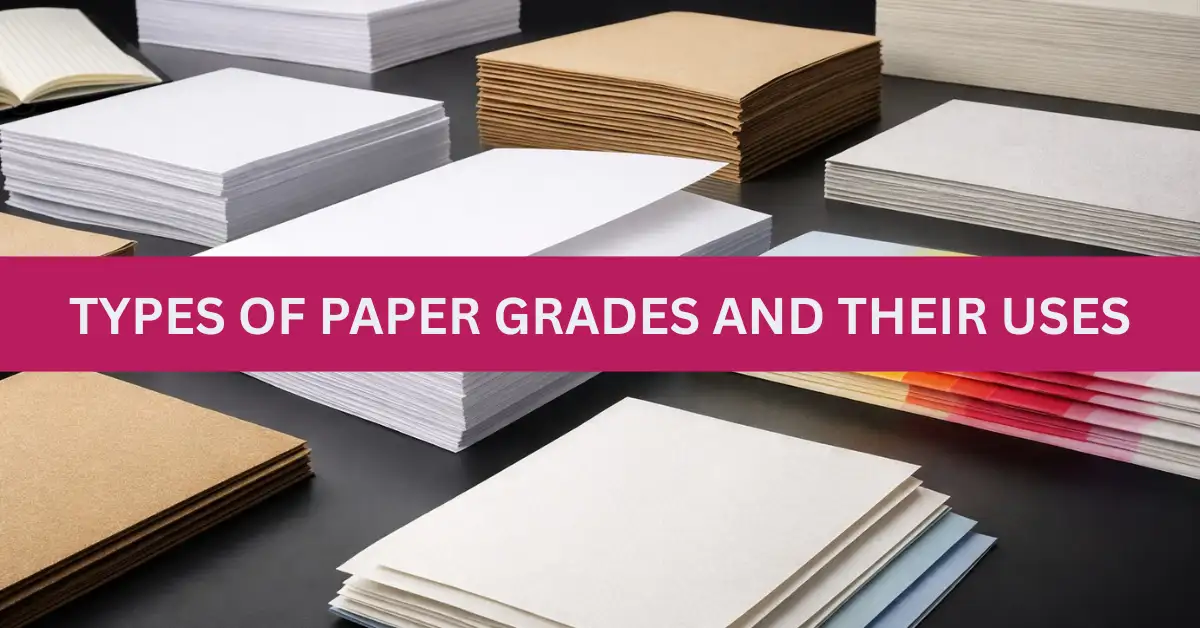
Paper grades are important for making sure your projects turn out the way you want. Printing documents, designing packaging, or working on a special project, choosing the right paper grade is key to getting the best results.
In this article, we’ll explore different paper grades, such as text paper, cover paper, kraft paper, and coated papers, and how they are used in industries like marketing, publishing, and packaging.
Paper Grades Explained
Paper grades refer to the classification of paper based on specific characteristics that determine how the paper performs in various applications.
Several key factors define paper grades, influencing their characteristics and different purposes:
- Basis Weight (GSM): Measured in grams per square meter. A higher GSM typically means a thicker, long-lasting sheet.
- Fiber Source: The paper is made from Virgin fiber (stronger, from fresh wood) or Recycled fiber (eco-friendly, but shorter fibers).
- Coating: Uncoated paper is absorbent, while Coated paper (gloss or matte) uses minerals like clay to improve print sharpness and moisture resistance.
- Finish: The surface texture of the paper, such as glossy, matte, satin, or textured, impacts how the paper absorbs ink and its overall appearance. It is a crucial factor in printing materials and presentations.
- Opacity: Higher brightness (measured 0–100) makes colors pop, while opacity prevents ink from showing through the other side.
Common Paper Grades and Their Uses
Here’s an overview of the most common paper grades and their uses:
Text Paper
- Weight: Typically ranges from 70gsm to 120gsm
- Finish: Smooth, ideal for text-heavy materials
Text paper is lightweight and smooth, which makes it perfect for printing. Its smooth finish ensures sharp and clear text, ideal for high-quality printing. Common uses include brochures, flyers, and business cards, where legibility and print quality are essential.
Cover Paper
- Weight: Heavier than text paper
- Finish: Sturdy, premium feel
Cover paper, which is thicker, provides extra durability and is suitable for the outer layers of printed materials. It’s commonly used in industries like greeting card manufacturing and publishing for items like booklets, postcards, and product packaging.
Newsprint
- Weight: Lightweight, inexpensive
- Finish: Rough texture, low opacity
Newsprint, a lightweight and cost-effective paper, is mainly used for newspapers and mass-print publications. It has low opacity and a rough texture, making it ideal for high-volume print runs but not suitable for high-quality projects. However, it remains a budget-friendly option for high-volume printing.
Cardstock
- Weight: Ranges from 200gsm to 350gsm
- Finish: Durable, thicker paper
Cardstock, which is thicker than typical paper, is commonly used for business cards, postcards, and invitations. In bakery packaging boxes, cardstock (200gsm to 350gsm) is best for creating rigid structures like folding boxes, cupcake inserts, and decorative sleeves that must protect delicate items from being crushed. Therefore, it is ideal for packaging that needs durability and flexibility.
Coated Paper
- Weight: Varies, typically heavier
- Finish: Glossy, smooth coating
Coated paper, with its glossy finish, enhances print quality by offering superior ink coverage and richer color reproduction. It’s commonly used for high-end brochures, magazines, and photographic prints, making it perfect for marketing materials that require visual impact.
Uncoated Paper
- Weight: Varies, typically lightweight
- Finish: Natural, rough texture
Uncoated paper, with its natural, rough texture, is ideal for materials requiring an organic or professional look. Common uses include letterheads, notebooks, and envelopes, and it is often chosen for its tactile feel.
Kraft Paper
- Weight: Heavy-duty, durable
- Finish: Natural brown color, rough texture
Kraft paper, being strong and durable, is typically used for packaging, shipping, and wrapping. Its robustness makes it ideal for handling weight without tearing, and it’s widely used in sustainable packaging due to its biodegradability. Kraft paper is a top choice for Kraft soap boxes, particularly for creating custom Kraft boxes.
Corrugated Paper
- Weight: Varies, typically heavier due to its structure
- Finish: Fluted, provides cushioning
Corrugated paper features a fluted structure between two flat liners, providing extra strength and cushioning. It’s commonly used for CBD subscription boxes and protective packaging in industries that require safe transport of fragile goods.
Custom Coated Papers for Packaging
- Weight: Varies depending on product requirements
- Finish: Soft-touch coatings, embossing, foil stamping
Custom-coated papers, used in luxury packaging like cosmetic boxes, enhance both function and aesthetic appeal. These papers often feature finishes like soft-touch coatings, embossing, or foil stamping, which add visual and tactile appeal. They are typically used for cosmetics, high-end gifts, and fashion packaging.
Choosing the Right Paper Grade for Your Needs
When selecting the appropriate paper grade, several factors should be considered to ensure it meets your specific requirements. Here are key points to guide your decision:
- Purpose: What will the paper be used for? The use case will influence the best choice from simple printing to quality box production.
- Budget: Understand that some paper grades, particularly those with higher quality or specialized finishes, come at a premium cost. Assess your budget to determine how much you’re willing to invest in your paper choice.
By considering these factors, purpose, and budget, you can assess your specific needs and select the right paper grade that balances quality and cost-effectiveness for your project.
Conclusion
Selecting the right paper grade is crucial for achieving the best results in your projects, for printing, packaging, or presentation. The available options vary in characteristics, and understanding these differences helps ensure your choice aligns with the intended purpose.
By focusing on the specific needs of your project, you can ensure that the material used enhances the quality and contributes to the overall success of your work. The right paper choice can promote your brand’s image, protect your products, and provide the lasting impression you seek.